August 28, 2011

Wild Animus


Travel back in time with me, dear readers, to the end of the spring semester of my senior year of undergrad. It's early May, because the soot-encrusted ugly snowbanks are mostly, but not quite, gone. As I leave the campus center, two girls ask me if I'd like a free copy of a book. They've got bags full of these books. The book is Wild Animus by Rich Shapero, an author I've never heard of. I figure he must be local, or otherwise affiliated with the University. I take my copy, thank the girls, and head back to my apartment. I promptly do a Google search on the author and his book, and learn the following: "Rich Shapero (born 1948) is an American venture capitalist, self-published writer, and musician. He grew up in Los Angeles and attended UC Berkeley where he graduated in 1970 with a degree in English literature." (Thanks, Wikipedia.) So, no. Not a local, not a student. And, of this book? "Shapero's book Wild Animus was released in 2004 using print-on-demand technology by his publishing company, Too Far. Initially 50,000 copies were printed, and copies of the book have been given away in for promotional purposes. Shapero has also published three CDs, "The Ram," "The Wolves," and "Animus," which were used in free promotional distribution, both separately and in a boxed set with the book." In other words, Shapero had been giving his book away for years all over the country, presumably because no one was buying it for money. Oof. This musical accompaniment to the novel intrigued me, and I decided to check out Shapero's book's website for more details. Apparently, neither the book nor the music tells the whole story of Wild Animus, and the two must be experienced in tandem for the full experience. I played along - the music streams on his site for free - expecting the tracks to be some sort of looping background music. Because how can you read to anything else? Instead, my ears were assaulted with very hard and heavy rock music, complete with over-the-top riffs, fast drumming, and wailing lyrics. The task at hand, as described, was purely impossible. I shelved the book hastily, and only recently today, during "Hurricane" Irene's assault on New England, did I pull it out for a reading. The book was actually a very quick read, but that may be because I skimmed more or less everything after the first few pages. Shapero, bless him for his efforts, simply isn't a good writer. This had been a suspicion of mine for a while, given that good authors usually don't insist their writing be experienced in tandem with death metal, and typically don't just give away their books on college campuses. Allow me to summarize what little plot I can. (And most of my own understanding has been gleaned from Shapero's website.) A young man falls in love for the first time, and enjoys that initial feeling of "surrender" so much that he decides to always live life on the edge. He moves to the Alaskan wilderness, where nature and wilderness overwhelm him and he may continue to feel both helpless and excited. He becomes fascinated with the Dall sheep, a wild Alaskan mountain goat, and begins to envision himself as a ram. In fact, the book is narrated in the third person, but passages are emboldened and italicized and written in the first person. In these parts, the main character envisions himself as a majestic, well, sheep. (Is he tripping on acid? Perhaps. I really have no idea.) The natural predator of the Dall sheep is the wolf. There are plenty of passages in which the main character, as a sheep, is being chased by wolves. Is this a metaphor for the thrill of being in love? Is it to be taken literally? Again, I'm not sure. The book feels half stream-of-consciousness at this point and half Animorphs. I'd give the author the benefit of the doubt in most cases, but in most cases I'm not reading a free book with an accompanying soundtrack. Eventually the main character creates a diety named "Animus" - or is Animus extant outside of his mind? - and becomes obsessed with Animus and being a ram and running from the wolves in the freezing Alaskan mountains. His girlfriend feels like she's been replaced, but then joins him in ram role-play/worship anyway, and by the book's end the dude is dying in the middle of nowhere being torn limb from limb by a pack of wolves. So, that's the story for you. It's unclear to me, again, how much of it is real and how much of it simply takes place in the ram-man's mind. I'm also unclear what the point of the novel was at all. I'm glad it doesn't matter. Here's another excerpt from Shapero's site: "Experienced as a whole, the music expresses the emotional core of the story and the novel serves as its narrative shell." Don't good writers convey emotion within their writing? I guess Shapero isn't even pretending to be a good writer. But then, that's okay. He's probably just an average Joe who really wanted to tell the world a story, for some reason, and I like that he followed through on his dream by publishing his own book and giving it away to college kids around the country. Amazon.com currently has 139 customer reviews for the book, and 90 of them are for one star out of five. But don't think that it even has that many "defenders;" "The most helpful favorable review" can be found right here, and is well worth a read. Actually, I was more entertained by that review than I was by Wild Animus, and that's without even handicapping the former for being 1/300 as long. Let this be a lesson to all of you out there, as if you needed to be told - you get what you pay for, and new books being given away for free are being given away for free for a reason.

Lost: Season 6


I've vented and ranted enough times in the past year or more about what an utter letdown the sixth and final season of Lost was. For three seasons, it was my favorite show on television and I was completely convinced that the various dots the writers had mysteriously placed everywhere would somehow connect in an ornate and well-articulated manner. Instead, the showrunners realized with about five episodes left that they had way too many unconnected dots left to reasonably connect, and instead just began to explain the dots away in bunches. "Oh, we're going to leave that one unanswered. It's supposed to be a mystery. Oh, we're not going to have time to elaborate on that backstory. Blame the writers' strike!" The sixth and final season was just so sloppy, poorly paced, and shoddily put together. It wasn't just a bad season of Lost, or a case of a TV show extending itself for one season too long; it was a grand reveal that never was. Because it was so frustrating and unsatisfying, it retroactively made many moments from many previous seasons frustrating and unsatisfying, ultimately compromising the entire show's integrity, and even tainting the initially fantastic early seasons. I'd like to think that if I went back and watched the first season or three, I'd still love the way it all sorted out. Perhaps Lost would have been better off had it been canceled after the third season. With a few tweaks, that season's finale would have made a fantastic series finale. Instead, we got a series finale in which the main theme was, "nothing we do in life matters because the people we do it with will all be there with us in death." Wait, what? And some casual fans actually liked that ending? And defended it by saying, "you can only hate the way Lost ended if you cared more about the sci-fi mysteries than the characters" in a non-ironic way? Ugh. Blech. Sigh. Perhaps nothing can illustrate Lost's decline more than my DVD viewing procedures. I watched the first season on DVD at least twice, many episodes three or four times (and the pilot probably seven or so, I swear). I bought the second season for full price and watched it twice through with new college friends. I bought the third season immediately and for full price as well, and watched every episode once again, a few of them twice. Then it was announced that the show would run for three more seasons an end. My friends and I already looked forward to being able to buy Season 6 on DVD some time in 2010 and watching the entire series all the way through again. Then Season 4 was so-so, and I bought the season and watched it right away only out of practice and principle. The same was true of Season 5. (That write-up begins with the sentence, "Lost is one of my favorite shows of all time, but I'm really unsure about where it's headed after this messy season," and ends with "I know Lost has enough left in the tank. It's up to the writers to make the right decisions, execute, and deliver." Whoops!) And after Season 6 was as disappointing as it was, I didn't even buy it for four months, and din't watch it for another eight months. And my desire to go back now and watch all six seasons in order is nonexistent. Oh well. A lot of good shows wind up with weak final seasons. But that's the thing - Lost went from being a great show to merely a good one because of how uninspired and lame the ending was. And I don't just mean the final episode, but by extension, the final season, and perhaps even the final two or three. Eh, whatever.

August 25, 2011

The Secret Garden


Recently I've tried to implement somewhat of a FIFO system on my backlog. That is to say, "first in, first out," which essentially just means that the oldest items in the backlog should be the next ones I attempt to log. I like that I'm semi-seriously pushing myself to do this because it's forcing me to read and watch and play the stuff I've been putting off for years instead of just jumping right into my most recent acquisitions. Unfortunately, the book backlog is front-loaded with all sorts of books I had as a kid (or at least as a young teenager) and we all know just how little I've enjoyed those for the most part. That said, The Secret Garden wasn't half bad. I was especially dreading this one, actually. Not just kid-lit, but little-girl-lit, and little-girl-lit from a hundred years ago to boot. The daunting prospect was enough to make me shudder. But there's actually some decent characterization and story-telling going on here, and that was more or less the best case I could envision going in. My girlfriend claims this is an old favorite of hers, but when she asked me the other night what part I was on, she seemed to have very little memory of the characters or plot. Oh well. Sometimes we remember liking things as kids, but have no recollection of anything else about them, I guess. Like, how many Teenage Mutant Ninja Turtles episodes did I see? Easily dozens and possibly a hundred. But if you asked me to summarize the plot of any one of them, the best I could do would be struggling to recall more information about this one episode where Shredder and his baddies rigged a "free pizza" contest so that the turtles would win a booby-trapped pizza prize. Also there were some episodes with aliens (I think) who called themselves the "Dudettes" or something like that. As in, female dudes. Look, clearly, it's hazy. (Did Yogi Berra ever say something like that? He should have.) Wow, that got away from me fast. Anyway, I rarely "grade" things on Back-Blogged, and when I do I try to do so on a curve. ("Considering the genre and the time period..." and so forth.) But in terms of overall enjoyment and entertainment and enrichment, this 23-year-old man in the year 2011 would have to give The Secret Garden something along the lines of a D+. But when the expectation is an F, that's something to be proud of. So, rest easy in that grave, Frances Hodgson Burnett. You've done all right by me. That said, I will never read A Little Princess. Ninja Turtle-loving six-year-old me hated that movie!

August 22, 2011

The Omnivore's Dilemma


It had been far too long since I'd read a nonfiction book; my last such logging took place back in April when I read Angela's Ashes. My last science-y book was Malcolm Gladwell's Blink last November. And my last truly science-based book was Fearful Symmetry, way back in June of 2010. Clearly, I was overdue to enrich my mind a bit with some concentrated knowledge. Now, this isn't the first book about food that I've read, or even the first one I've posted about. But it certainly taught me a lot more about food and the 21st century American diet in general than Fast Food Nation did. Let me start off by explaining the title. Herbivores eat plants and carnivores eat meat. Neither needs to fret about what's on the menu on any given night because their diets are so specific, for the most part, and not very diverse. But omnivores have options. And human beings living in the modern day supermarket era have literally thousands of choices when it comes to what to eat for any given meal. The book's author, Michael Pollan, posits that especially here in America, where food is plentiful and diverse (unlike in third world countries) and where we have no real national cuisine (unlike, say, the French or the Italians), we have what appears to be a nation-wide eating disorder; nutritionists are constantly changing their minds over the right things to eat, and when and how to eat them, while new diet crazes spring up and fade away year after year. So what exactly is it that we should and shouldn't be eating? Pollan never really answers the question directly, but goes on to spend the majority of the book explaining in fascinating detail just where our food comes from. It should be no secret, of course, that most of our beef, chicken, and pork comes not from pastoral farms but from industrial meat factories of sorts which pump animals full of hormones to make them grow meatier in a shorter amount of time. But what actually surprised me is just how unnatural the very food these animals eat is. It's corn. Cows aren't supposed to eat corn, having evolved to get their nutrients from grass instead. They have a specialized organ called a rumen that allows grass to sit for a while and ferment into sugar for sustenance. Corn, already loaded with sugar, ferments into alcohol inside the rumen, and by the time most cows (70%) in the industrial food chain go to slaughter, their livers are failing. So 70% of our country's beef has come from terminally ill cows. I'm not particularly shocked or disgusted by this fact, but it's eye-opening all the same. They're fed corn because it gets them fatter faster than grass would, which increases meat output and turnaround time, and by extension, of course, profits on the bottom line. Plus, there's too much corn not to feed them corn; we're making way too much corn as a nation, and someone or something has to consume all of that corn! The book goes into great detail about corn itself, and its journey from very humble origins (a few tiny terrible-tasting kernels, unhusked, on an inches-high blade of grass) to backbone of the agriculture and economy of the world's only superpower, all via domestication and cross-breeding rather than natural selection. Corn is an ingredient (via high fructose corn syrup or xanthan gum or several hundred other derivatives) in nearly every processed food item in our diets. A typical meal at McDonald's is more "corn" than "not," with the soda's caloric source being 100% corn, the hamburger's being 50%, and the chicken nuggets' being 60%. Corn and soybeans (the former for carbohydrates, the latter for proteins) are two of the only crops being grown by most industrialized farms in America today. Again, kind of eye-opening. Or at least I thought so. So, what do you do to avoid eating tons of corn? And chemical fertilizer-grown pollution-causing corn, at that? You eat "organic." But Pollan spends just as much time pulling back the curtain on the organic "food chain" as he does showing us the unnatural mechanization of the corn-based industrial one. "Organic" is just a term owned and defined by the FDA, and you can still put certain amounts of artificial flavoring and synthetic additives into food and still call it organic. "Organic" just means, more or less, "not chemically fertilized or hormonally injected." That organic meat - grass-fed beef and free range chicken eggs - is better for human consumption than corn-fattened sick animal meat is hard to argue against. But is "organic" better for the environment? Maybe not. Because of factors like seasonal availability and ingredient rarity, you often need to truck animal feed halfway across the country just to make sure it comes from organic sources. And this, of course, pollutes the air with diesel exhaust. By the time I was finished reading the section on this "industrial-organic" food chain, it was clear to me that Whole Foods wasn't nearly as different from McDonald's as I had previously believed. For the third section of four, Pollan travels to a pastoral (ie, grass-based) farm in Virginia, where a hard-wrking family maintains a delicate but very natural balance of plants and animals, earning the admiration and recognition of locals and regional restaurants. But that's part of the problem with truly organic, old-fashioned farming. It's seasonal and regional. If it weren't for supermarkets and industrial farming, or at least lengthy transport routes, we couldn't eat red meat in the summer time or citrus fruits in New England. So while pastoral organic farming is great on a small scale level for certain parts of the country, it's clearly not an adequate solution for our current "national eating disorder." Finally, Pollan goes way old school and tries to create a meal like a hunter-gatherer would, killing a boar and gathering some edible mushrooms from the woods. He admits that it's just far too much work, not to mention entirely impractical; there's not enough fungi and wild game in the country to feed even a fraction of its populace. Pollan does spend a whole lot of space talking about how good and wholesome it felt to eat an entirely self-made meal, though. Ultimately, he has no answer for the titular dilemma. The industrial food chain is bad for people, animals, and the environment; the organic one is impractical for a nation as large as ours is; and the hunter-gatherer method is far too antiquated and ill-suited for 21st century America. But the lack of a definitive answer to the problem doesn't come off as pessimistic. Instead, I enjoyed the various things I'd just learned about the food I eat every day, where it comes from, and how I could (if I wanted to) take steps to improve my eating habits for my own health as well as that of my environment. Yeah, it's a bit cliche to take so simple a message away from a 400-page book about food economics, but at least it was an enjoyable read. Unlike the McDonald's-hating author of Fast Food Nation, Pollan never seems to be pushing an agenda or judging people for their dietary decisions. He admits to being a vegetarian, but still takes part in killing animals in the book both on the farm and in the wild; clearly, he's to trying to come off as "holier than thou"or food-snobby at all. Inspired by readers complaining that he'd never actually come up with any solutions on what middle Americans can do to improve their diets, Pollan wrote a follow-up book (do nonfictional works have "sequels?") called In Defense of Food that I'd like to try out sometime. But I've still got 32 unread books on my backlog, so... not yet. Not yet.

August 21, 2011

On the Road

I feel like On The Road is a book that people idealize. They read it and think "man, I was born in the wrong generation. If I was around in the fifties I would totally be at the forefront of the beat movement." Well I can say right now without a hint of cynicism that I would most certainly not make a good member of the beat generation. Frankly, I think these guys were assholes. On The Road is the mostly autobiographical story of a few cross-country roadtrips Jack Kerouac took with some friends in the late forties. It's written well enough and kept me interested, sure, but I can't get over how clearly these guys are examples how to NOT live your life. I mean, they're constantly drunk and on drugs, leading them to be assholes to strangers; they mostly get across the country bumming rides and using other people as their own personal resources; what little money they do have they gamble away fairly quickly; and most stunningly, Dean Moriarty, the character who protagonist Sal Paradise looks up to, has like four illegitimate kids by the end of the book, and no one ever calls him out on being a deadbeat dad. Maybe that's why they call it the "beat" movement? Okay, okay, this wasn't nearly as infuriating as Naked Lunch, another major work of beat literature, but I guess I'm just miffed that this became such a cultural icon. It's fun to think of a life spent on constant road trips, but the lesson of the book really felt like "don't care about anyone else but yourself," and that just aint something I can get behind.

Step Up 3

I am drawn to crappy action movies like it's my job. Bad Boys II? Awesome. Transformers? My favorite. GI Joe? So great. There is something about the Step Up movies that warms the cockles of my heart. (Disclaimer: I do not know what the cockle of my heart is.) I loved Step Up 1. I loved Step Up 2 even more. And here comes Step Up 3. Claiming to be the best of them all. Well lemme tell you, it was great.

I was trying to decide why I loved these movies, and I think it's because they are so simply predictable. Boy meets girl. Boy and girl love to dance. Boy and girl bond over dance. Boy and girl encounter a hitch in their ultimate dancing plan. Cue sad montage of pouty faces and lonely stares. Enter resolution. Joyful reuniting. Epic dance finish. Scatter the entire movie with some hilarious one liners and awesome dance steps, you have the recipe for an awesome freaking movie. And Step Up 3D didn't disappoint. If any of the above plot line interests you, I would highly recommend it. Because you know what? It's awesome.

Alex Cross's Trial

Have no fear! My #1 homeboy Alex Cross did not get arrest, and no, he is not on trial. Phew. That would be a crazy plot line. Oh wait, they already did that. See Pop Goes the Weasel. Anywho, the last book was about violence in Africa. This is about lynchings in the South. Our boy Cross, writes a memoir. Not his memoir though. One about his great Uncle Abe. No, it's not Lincoln. It's Abraham Cross. A black man growing up in Eudora, MS where lynchings are common. This book was so out of pattern (see the additional author) that I didn't want to read it. Would it still count as reading the whole series? I thought so. Steve made me doubt my commitment though, and so I read it.

Turns out, it wasn't bad. It was about a white man from DC who under the orders from Teddy Roosevelt he goes to his home town of Eudora to investigate the lynchings. Not only does he investigate, but he stirs up enough trouble, that he himself is lynched. He survives though and lives to fight the white men on trial who "didn't shoot and kill a black man". Sure. He is unsuccessful in his defense but he makes a lot of friends and gets support for a larger cause. Heartwarming.

Despite not wanting to read it going in, it went quicker than I thought. It was a good book and a much needed break from our hero, Alex Cross. Two more to go!

August 18, 2011

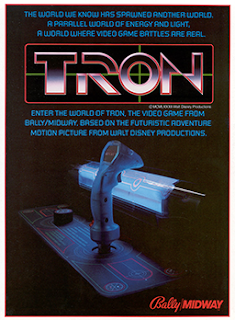
Tron


01010100 01110010 01101111 01101110 00100000 01110111 01100001 01110011 00100000 01100001 01101110 00100000 01100001 01101101 01100001 01111010 01101001 01101110 01100111 00100000 01110110 01101001 01110011 01110101 01100001 01101100 00100000 00100000 01100001 01100100 01110110 01100101 01101110 01110100 01110101 01110010 01100101 00101100 00100000 01110111 01101001 01110100 01101000 00100000 01100001 00100000 01111001 01101111 01110101 01101110 01100111 00100000 01001010 01100101 01100110 01100110 00100000 01000010 01110010 01101001 01100100 01100111 01100101 01110011 00100000 01100010 01100101 01101001 01101110 01100111 00100000 01110100 01101000 01100101 00100000 01101111 01101110 01101100 01111001 00100000 01100011 01101000 01100001 01110010 01100001 01100011 01110100 01100101 01110010 00100000 01110111 01101001 01110100 01101000 00100000 01110010 01100101 01100001 01101100 00100000 01100100 01100101 01110000 01110100 01101000 00101110 00100000 01001001 00100111 01101101 00100000 01100111 01101100 01100001 01100100 00100000 01001001 00100111 01110110 01100101 00100000 01110011 01100101 01100101 01101110 00100000 01110100 01101000 01101001 01110011 00100000 01101101 01101111 01110110 01101001 01100101 00101100 00100000 01100001 01101110 01100100 00100000 01100001 01101101 00100000 01100101 01111000 01100011 01101001 01110100 01100101 01100100 00100000 01100110 01101111 01110010 00100000 01110100 01101000 01100101 00100000 01110011 01100101 01110001 01110101 01100101 01101100 00101110 00100000 01001001 00100000 01100111 01101001 01110110 01100101 00100000 01101001 01110100 00100000 00110011 00101110 00110101 00100000 01101111 01110101 01110100 00100000 01101111 01100110 00100000 00110101 00100000 01101001 01100100 01100101 01101110 01110100 01101001 01110100 01111001 00100000 01100100 01101001 01110011 01101011 01110011 00101110

L.A. Noire

Rockstar's Grand Theft Auto 3 is one of my favorite games of all-time. It pioneered the entire genre of open-world gaming and left an indelible mark on tons of video games that came after it- for better or for worse (think the awful open world of No More Heroes). The ability to do whatever you want, and actually have more fun just tooling around and not bothering to play the main campaign was something I really hadn't seen before. Rather than speed from mission to mission, I spent countless hours plowing through pedestrians, attempting daredevil car jumps, and killing myself in creative ways. But since then, aside from the inspired DS game GTA: Chinatown Wars I haven't spent much time on any other games from that series. Frankly I think the problem is that Rockstar got too big for its britches. They started making games gigantic, with no sense of pacing, and filled them with repetitive crap rather than interesting mini-games. Tons of people kept eating it up, but I remained unimpressed by GTA: San Andreas and GTA IV. Then Rockstar came out with Red Dead Redemption, which I still haven't played, but I've seen glowing reviews online yet mixed reviews from friends of mine who have played it. I'll eventually get to Red Dead, but for now I was content to play the newest Rockstar-developed game: L.A. Noire. And while I wasn't as big a fan as my roommate Ryan, I still found L.A. Noire a solid gaming experience throughout. The first thing to talk about is the graphics. They're good. Like, reeeeally good. Scary good graphics. There was some sort of hullabaloo over the face capturing technology that got used, and it doesn't disappoint. When so much of the game comes down to reading people's faces, it's important that they look natural and fit in with the feel of the rest of the game. And they do. We have a few famous faces here as well- or at least familar ones. Everyone knows that Mad Men's Ken Cosgrove (no idea what the actor's name is) is the main character, Cole Phelps. But in addition I counted at least 4 other Mad Men actors present. It's not quite pulling Martin Sheen in Mass Effect 2, but L.A. Noire has an excellent cast of acting talent. Second, the gameplay. As I said before, I lamented the fact that Rockstar had gone for such a "bigger is better" mentality with their recent games, and was worried about the fact that a sizable chunk of Los Angeles was supposed to be recreated here. Well, my fears were unfounded. The gameplay here doesn't stress "ooh"-ing and "aah"-ing over the landscape they worked so hard on, but on the mysteries themselves. After the first few cases I found myself fast-travelling everywhere, and it really helped keep my interest during some of the longer cases. Solving mysteries can unfortunately be a little simplistic- as long as you can get from one point to the next, there's no real way to lose. Finger the wrong bad guy? There's no noticable penalty. Miss an essential clue? It's ok, it didn't matter much in the first place. The only "game over" screens come from specific action sequences where you might lose a fleeing suspect, or be spotted by someone you're trying to secretly tail. Even these can be skipped if you mess up a few times in a row. So there's not too much at stake during your average case. A few of the cases themselves are duds, but for the most part they make up some interesting multi-case storylines- you might find yourself trying to end a drug war on the vice squad, on the hunt for a serial killer, or during the climactic finale unravelling a huge (and satisfying) government conspiracy based on a few housefires. A few times my interest waned, mostly during a series of murder investigations that all ended up pretty similar, but the ending to each set of cases makes up for it all. Overall the game has its ups and downs- the downs are never too bad, and the ups are especially high. While I don't think this will be a game of the year for 2011, it certainly seems to be one of the better ones, and anyone looking for some high-quality sleuthing should give it a shot.

August 17, 2011

Cross Country

You got it! Another Patterson Cross masterpiece. Instead of telling you about the plot, I'm going to tell you about how this book paints Africa. Cross goes to Africa. He immediately needs to give someone money as a bribe to explain anything to him. Then he gets kidnapped. By people that seem like the police. Then he is shoved in a jail where he is deprived water, tortured, and completely mistreated. He is released through a bribe. Not after they stole all his money. He then travels to other parts of Africa where he must bribe people at every road stop. Then he is brutally attacked by a teenage who works for a big time mob boss / diamond smuggler / African drug lord. The teenagers beat him up and almost kill him, thankfully he escapes the teenagers. He meets a journalist. The journalist's entire family is murdered because of her story. Then she and Cross are brutally beaten and taken back to the hell jail. Africa and the American embassy kick him out of the continent for causing too much trouble.

This paints a bad picture to me.